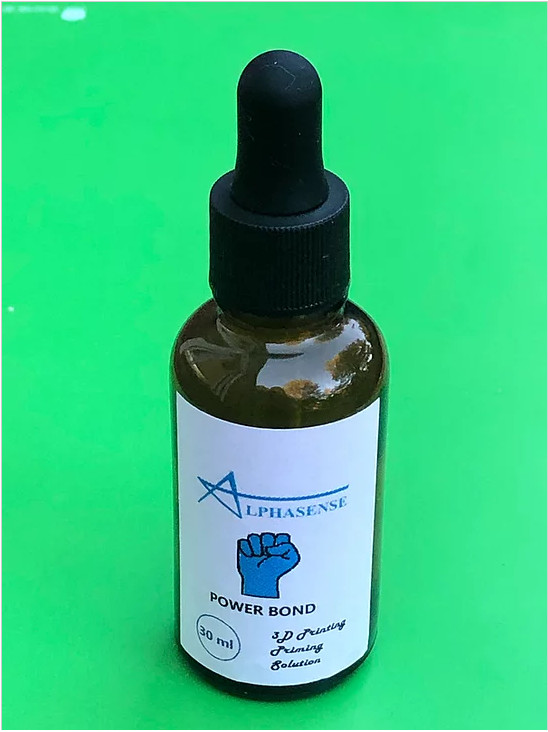
ALPHASENSE POWER BOND LCD/DLP/SLA 3D RESIN PRINTING UV PRIMER For Sale
When you click on links to various merchants on this site and make a purchase, this can result in this site earning a commission. Affiliate programs and affiliations include, but are not limited to, the eBay Partner Network.
ALPHASENSE POWER BOND LCD/DLP/SLA 3D RESIN PRINTING UV PRIMER
Price: US $30.00
For users ofbottom-up LCD resin printers, build plate adhesion issues are a common challenge. Prints may either detach from the build plate or stick to the FEP film in the resin vat, leading to failed prints. To address this problem,AlphaSense's Power Bondwas specifically developed. This priming solution acts as aUV-activated adhesive, designed to enhance the bond between the build plate and the 3D model. Here’s how it works: Athin layer of Power Bondis applied to the build plate. The layer is then exposed toUV light, creating a solid, cured bonding surface. This cured layer significantly improves adhesion between the build plate and the photopolymer resin. The principle behind Power Bond is based on the fact thatsimilar materials/interfaces bond more stronglythan dissimilar ones. In this case, the bond between thecured priming layer and the photopolymer resinis stronger than the bond between theresin and the metal build plate. This ensures that prints remain securely attached to the build plate throughout the printing process, reducing the risk of failed prints. WithAlphaSense's Power Bond, users can achieve reliable and consistent adhesion, making it an essential solution for overcoming common challenges in bottom-up LCD resin printing. Volume: 30 ml /1 Oz. Applicable wavelength: 350 to 420 nm. Use the eye dropper to apply a few drops on the desired printing area. Spread the priming layer evenly using a spread stick or a name card. Expose the priming layer either use a UV lamp or sunlight. A few layers (i.e. 3-5) may be needed to achieve strong bond. In addition to the priming layer, the user needs to make sure that the build plate is leveled/calibrated, the plate surface was roughened using a P150 sand paper and thoroughly cleaned using isopropyl alcohol (70%).