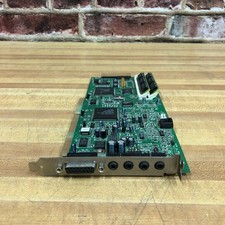
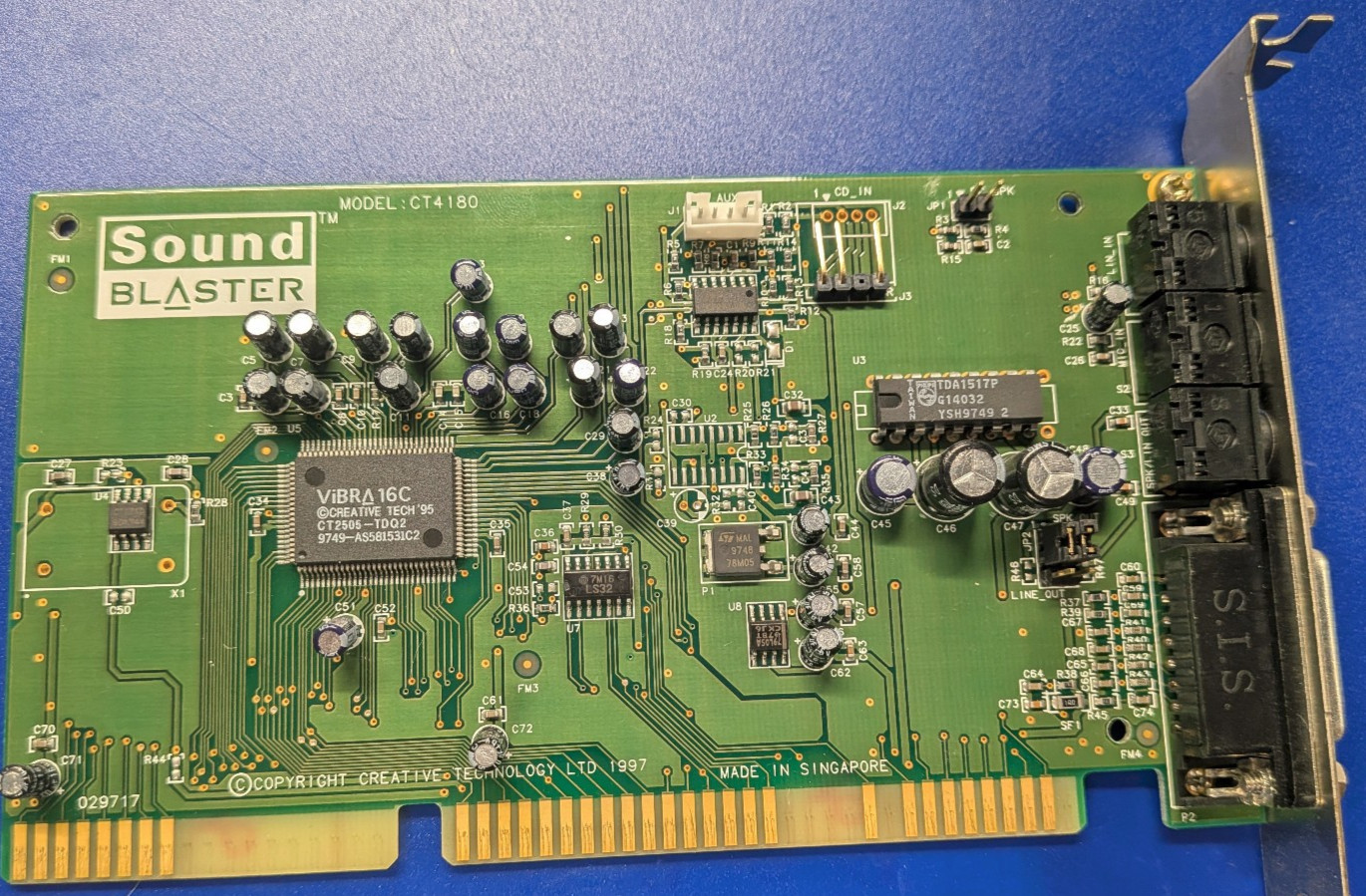
 When you click on links to various merchants on this site and make a purchase, this can result in this site earning a commission. Affiliate programs and affiliations include, but are not limited to, the eBay Partner Network. Released around 1997, this sound card was designed for the entry-to-mid-range PC market and remains highly sought after today for vintage PC restorations and retro DOS/Windows 95/98 gaming. [1, 2, 3, 4]⚙️ Core Technical Specifications - Audio Chipset: Creative ViBRA 16C (CT2505-TDQ2). This highly integrated chip combines the sound processing, Plug-and-Play bus controller, and FM synthesis into a single package. [1, 2]
- Bus Interface: 16-bit ISA (Industry Standard Architecture). The long, gold-pinned connector at the bottom fits into legacy motherboards from the 386, 486, and early Pentium eras. [1, 2, 3, 4]
- Audio Fidelity: 16-bit CD-quality stereo playback and recording. [1, 2]
- Music Synthesis: Uses Creative's proprietary CQM (OPL3-compatible) synthesis to recreate retro FM MIDI music found in older computer games. [1, 2]
- Amplifier: Features an onboard TDA1517 audio power amplifier chip (visible on the right side) to directly power passive desktop speakers or headphones. [1, 2]
🔌 External & Internal ConnectivityRear I/O Bracket Ports (Right Side): - Game/MIDI Port (DB-15): The large 15-pin D-sub connector used for vintage joysticks, gamepads, or external MIDI hardware connections. [1, 2]
- Audio Jacks (3.5mm): Three input/output audio ports labeled on the PCB:
- MIC IN (Microphone input)
- LINE IN (Audio input from external devices)
- SPK/LINE OUT (Speaker/Headphone output; configurable via the JP2 jumper cluster nearby) [1, 2, 3, 4, 5]
Internal Headers (Top Edge): - AUX: Auxiliary audio input header.
- CD_IN: Connects directly to an internal IDE CD-ROM drive via an analog audio cable, allowing users to play regular music CDs through the computer speakers. [1, 2, 3]
 |
|