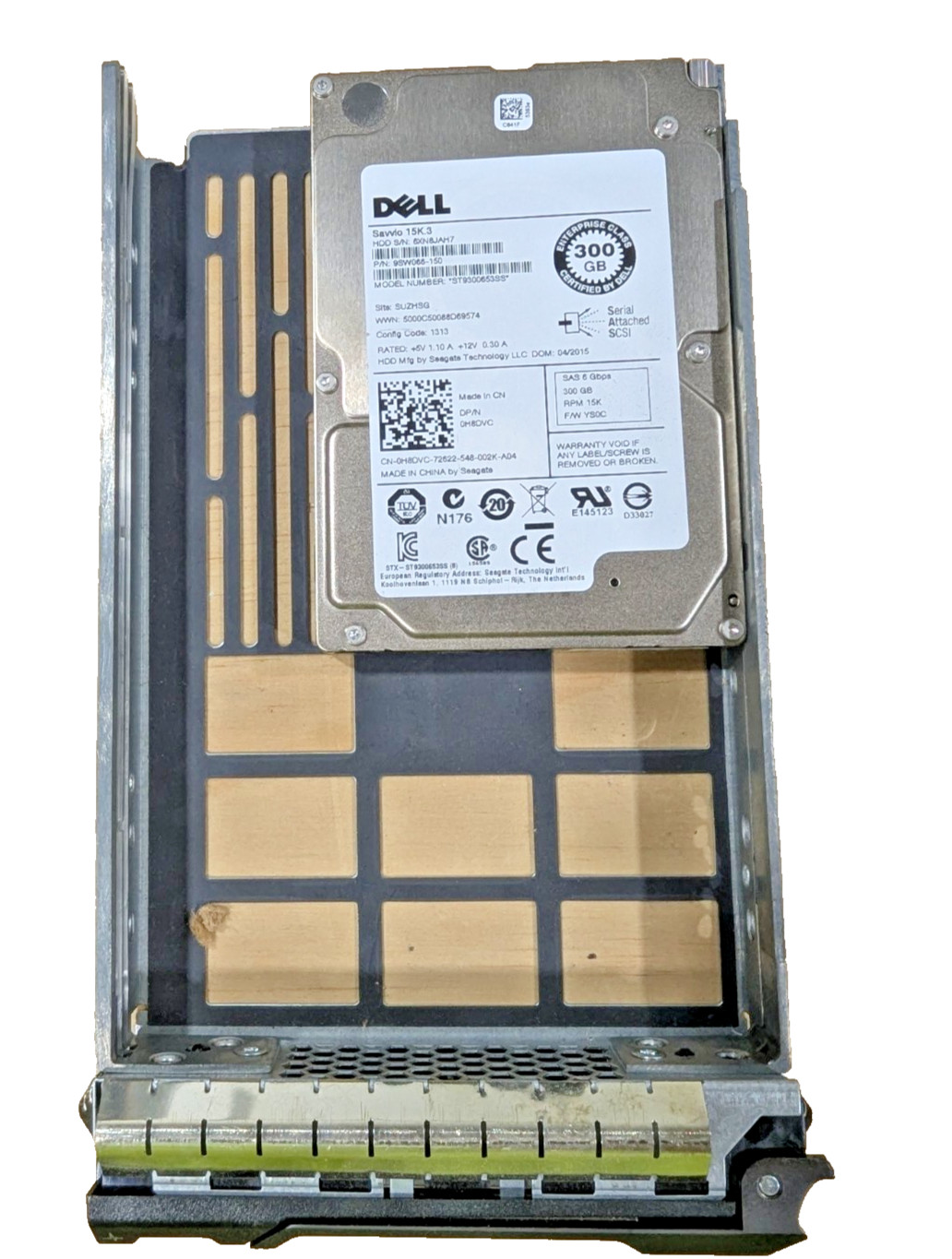
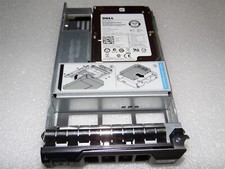
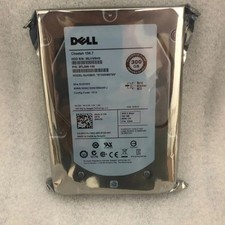
300GB 15K 6G SAS 3.5" Compatible ST9300653SS 0H8DVC for Server
📊 Key Specifications
- Capacity: 300 GB
- Interface: SAS 6 Gb/s
- Rotation Speed: 15,000 RPM (very high for HDD)
- Form Factor: 3.5″ (LFF – Large Form Factor)
- Cache: ~16 MB
- Model: Seagate Cheetah series (ST9300653SS)
- Dell Part Number: 0H8DVC
- Hot‑Swappable: Yes (with proper server tray)
✔ Enterprise‑grade SAS hard drive optimized for performance workloads in server environments.
🧠 What This Drive Actually Is
Despite being a 300 GB drive, this is not a consumer desktop HDD — it’s an enterprise SAS drive designed for:
- High throughput and quick access compared with slower spinning drives
- Mission‑critical storage tasks in data centers
- RAID deployments in servers
Because it spins at 15,000 RPM, it offers much lower latency and faster seek times than 7,200 RPM or 10,000 RPM drives.
📌 True Performance ContextDrive TypeRPMBest Use15K SAS (this)15,000Fast HDD tier, high random I/O10K SAS10,000Balanced performance + capacity7.2K SAS7,200Capacity / bulk storageSATA SSD / SAS SSD—Highest performance overall
👉 While 15K HDDs are very fast by HDD standards, SSDs outperform them significantly, especially for random I/O.
⚙️ Compatibility
This drive will work in servers that support 3.5″ SAS drives, including:
- Dell PowerEdge series with LFF bays (e.g., R730, R720, R630 with 3.5″ option, etc.)
- PERC or other SAS RAID controllers
- Other enterprise servers that accept SAS LFF drives
✔ SAS controllers can see both SAS and SATA drives, but this is SAS so it’s optimized for SAS environments.
⚠️ Note: Some servers only support 2.5″ drives — this 3.5″ drive will not fit in those without a proper 3.5″ bay.
🧠 What “ST9300653SS” Means
- ST9300653SS is a Seagate Cheetah 15K model (enterprise level)
- Often rebranded and sold as Dell OEM 0H8DVC
Seagate Cheetah drives were once top‑tier performance HDDs across enterprise systems before SSDs became widespread.
💡 Typical Use Cases Today
- Legacy RAID performance tiers
- Boot drives (in older server setups)
- VM / database storage (where SSDs are not used or combined)
- Environments constrained by budget but needing higher HDD performance